

Yard Drainage in Port Orchard, Washington
Every fall the same phone call comes in. The yard was fine all summer, then the rain arrived and now there is a pond where the kids used to play. Or worse, water is sitting against the foundation and nobody knows how long it has been doing that.
Standing water is not a mystery. It is water arriving faster than the ground can move it, and the fix depends entirely on where it comes from and where it can go. We walk the property, find both answers, then build the system that matches.
What Our Customers Say
★★★★★
"Doug and his crew helped redirect the rain from my gutters so my back yard wouldn't be soaked. It works wonderfully. They also removed quite a bit of soil, leveled the backyard, brought in top soil and reseeded the yard. All the way, a very professional job."
DJ, Google Review
★★★★★
"Straight Up Excavation did a great job on our driveway. They were on time and did all that was expected. Very happy with the clean gravel they put down as requested. Makes for less mud opportunities in the rainy season! Definitely appreciate the compacting!"
Syndi O., Google Review
Why Port Orchard Yards Hold Water
Two things work against you here. The first is rain volume spread over months rather than dumped in an afternoon, so the soil never gets a chance to dry out and reset. The second is what sits under your grass. Clay holds water like a bathtub liner, and a lot of Kitsap County soil has plenty of it. Water hits that layer, stops going down, and starts going sideways.
Then there is the part homeowners miss. Your yard is not the only yard. Water from uphill neighbors, driveways, and roof downspouts all lands somewhere, and gravity does not care about property lines.
Ever wondered why the wet patch is nowhere near your downspouts? Usually because the water is not yours.
Drainage Systems We Build
There is no single product called "drainage." There are about seven, and picking wrong is how people spend money twice.
Surface drainage. We shape channels, ditches, and slopes so water leaves on top of the ground before it ever soaks in. Cheapest approach when the grade allows it.
Subsurface drainage. Buried pipe and drains that collect water below the surface and carry it off. This is what you need when the water is already in the soil.
French drains. A gravel-filled trench with pipe at the bottom, run to pull water away from foundations and low spots. Usually 18 inches to 2 feet deep, deeper when we are chasing water down to a solid layer.
Swales. Shallow shaped channels that move water and look like part of the yard rather than a construction project. Our favorite fix when a homeowner wants the problem gone without the lawn getting torn up.
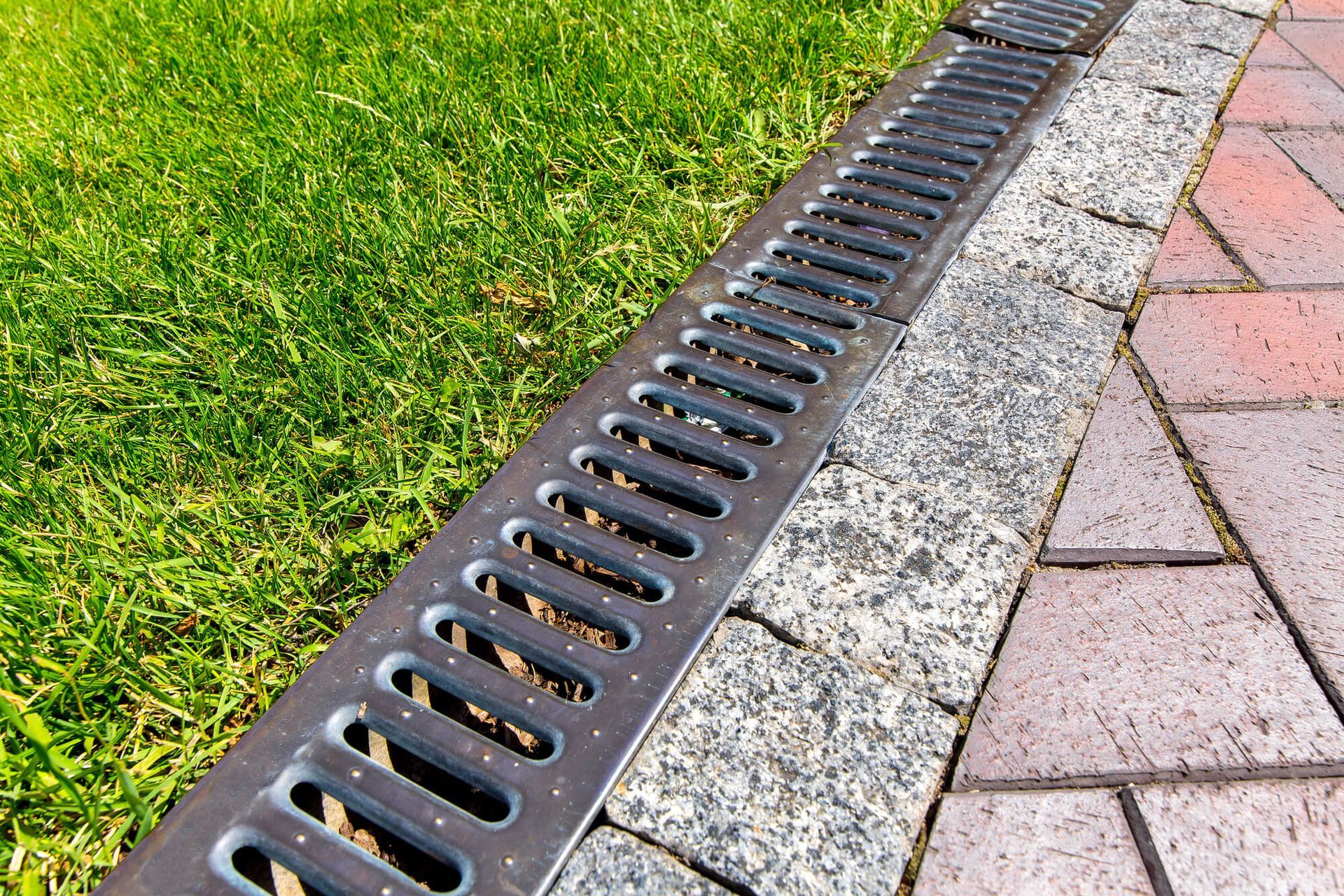
Trench drains. Narrow grated channels for driveways, walkways, and any hard surface that dumps water where you do not want it.
Retention basins. Temporary storage that holds runoff and releases it slowly, which matters when the receiving ditch or storm system cannot take everything at once.
Sump pumps. For flood-prone spots where gravity alone will not do the job. Placement is most of the work.
How We Diagnose the Problem
Our process starts with a walk, and if we can time it during or right after a storm, better. Dry-weather guesses are how bad drainage plans get made.
We look at where water enters the property, what the grade does with it, where it stalls, and what is underneath. We check the roof runoff, the driveway, the neighbor's slope, and the spot you called us about. Then we tell you what we would build and what we would leave alone.
That last part is real. We turn down work. A single soggy corner sometimes needs a regraded slope and a swale, not a full subsurface system, and quoting the big version would be easy money and bad advice.
We also check the cheap things first, because sometimes the cheap thing is the whole answer. Roof water is the usual suspect. A downspout dumping at the base of the wall can put hundreds of gallons into one spot during a single storm, and running that discharge 10 feet out to a proper outfall costs a fraction of any buried system. If that fixes your problem, we would rather tell you than sell you a trench.
Before anything breaks ground we put the scope, the timeline, and the risks in writing. Then we keep you updated while the work happens.
Drainage and Everything It Touches
Water problems rarely stay in one lane, which is why drainage work often overlaps with the rest of what we do. Regrading is frequently the real fix, so land grading and grading and leveling come up constantly on drainage jobs. A wall that holds a slope needs to move water too, and retaining walls built without drainage behind them fail. Buried pipe means utility and drainage trenching. New construction means site preparation with the drainage plan built in from day one, not added after the concrete cures.
Driveways deserve their own mention. A gravel drive with no crown and no ditch turns into a creek, so
driveway maintenance and drainage get solved together.
Keeping a Drainage System Working
A drainage system is not a one-time purchase. Gravel silts up, grates clog, outlets get buried by yard debris, and pipe can shift with ground movement.
We recommend inspections twice a year, once before the wet season and once after. It takes very little time and it is a great deal cheaper than digging up a failed line. Spring and early fall are the natural windows.
What kills most systems? Neglect, not design.
Frequently Asked Questions
Ready to Get the Water Moving?
No matter what terrain you have, we are the experts you can trust with it. We work throughout Port Orchard, Kitsap County, Mason County, and Gig Harbor, and you can see all of the areas we serve.
Call (360) 337-9051 and tell us where the water sits.
Call
(360) 337-9051 for a yard drainage estimate in Port Orchard and across Kitsap County